In 2026, AI tools will generate 42% of code globally, according to Exceeds. Yet the number of open developer roles isn’t falling. It’s rising. In fact, there are over 67,000 software engineer job openings, according to Business Insider.
That’s the paradox worth sitting with. AI doesn’t replace software engineers; it transforms this core role. As Qubit Labs sees it, in 2026, AI proficiency is no longer a “nice-to-have” skill; it’s a core part of the development workflow and an engineer’s competency. GitHub Copilot, Cursor IDE, and Claude Code have changed the game, and they set the direction for the structure of the dedicated AI development team, the value of specific skills, and employer expectations for specific roles.
This article explores how AI is changing developer roles and workflows and redefining hiring standards for software engineering roles. We will share our tips on how to stay ahead of AI and how companies can adapt their hiring strategy for the AI-ready future.
The Shift That Already Happened: What AI Automated and What It Didn’t

IBM highlights a positive AI impact on software engineering roles and the software development process. Namely, it efficiently automates repetitive tasks, improves software quality, streamlines decision-making, and improves user experience. Meanwhile, software engineers remain the ones who can direct AI in AI-augmented development, review its output critically, and make the architectural calls it still can’t.
What AI Tools Now Handle Reliably
There are specific tasks where AI has moved from a helpful assistant to a default first pass.
- Boilerplate and scaffolding. GitHub Copilot, Cursor, and Tabnine are used to generate repetitive setup code, config files, and standard project structures directly in the editor, with minimal prompting.
- CRUD endpoints and routine implementation. Cursor, GitHub Copilot, and Claude Code can rapidly generate CRUD operations and other common coding patterns. This use of AI in software development allows developers to spend less time on repetitive tasks and focus on solving complex problems.
- Code review and testing. CodeRabbit and Qodo use AI to make software development faster, more efficient, and more reliable. These AI tools automate code reviews and test generation, helping teams improve code quality and software reliability.
- Documentation. Mutable.ai, GitHub Copilot, and Claude Code simplify documentation by automatically creating and updating code comments, README files, and API documentation as code evolves.
- Onboarding. Claude Code, Greptile, and Cursor help developers quickly understand complex codebases, accelerating onboarding and reducing the time needed to become productive.
What Remains Deeply Human
With AI excelling at various tasks, the question “What will the future of software engineering with AI be?” lingers. Although the AI impact on software development is fundamental, software engineers are essential for making critical architectural decisions and for holistic system integration.
- Deep understanding of business requirements. Translating ambiguous stakeholder needs into technical requirements requires human judgment.
- Architectural decisions aligned with business goals. Alignment of technical needs with budget considerations and the team’s capability remains a fundamentally human responsibility.
- Complex debugging. An ability to identify multi-layer system failures comes from years of experience and intuition — something AI lacks.
- Security assessments. Identifying emerging threats, evaluating real-world risks, and making critical security decisions still require human expertise and judgment.
- User-centric design. Creating exceptional solutions requires empathy for users’ needs, behaviors, and experiences. Designing intuitive, inclusive products depends on human insight, empathy, and emotional intelligence, not just data and analytics.
- Ethical implementation of AI. Deciding when and how AI will be embedded into a product relies on human judgment, cultural awareness, and accountability — capabilities that AI cannot replicate.
What Changed: The AI Coding Tool Layer in 2026

Gartner states that 78% of Fortune 500 companies had adopted AI-assisted software development in at least part of their production workflows. Drawing on Qubit Labs’ experience, vibe coding has transformed software engineering and AI, as well as hiring logic. Today, companies hire fewer junior-level specialists. Instead, they employ AI-fluent seniors.
The Tools That Are Actually Being Used In Production Teams
In our experience, tech teams are stacking various AI tools to enhance a specific layer of the workflow.
- GitHub Copilot is an AI coding assistant used for generating code, reducing repetitive work, and providing real-time suggestions directly in the editor.
Best for: Developers looking for faster code completion and less boilerplate. - OpenAI Codex enables AI-native developers to read, modify, and execute code, helping automate development tasks and streamline workflows.
Best for: Teams seeking autonomous, hands-off PR review. - Claude Code handles complex refactoring, in-depth debugging, and the production of a high-quality first draft with minimal revisions.
Best for: Large-scale projects where output quality matters more than speed. - Cursor is an AI-powered code editor that helps development teams prototype faster, streamline refactoring, and integrate AI into daily workflows.
Best for: Teams focused on rapid prototyping and multi-file edits. - Windsurf is a full AI-integrated IDE used for automating coding tasks, navigating large codebases, and simplifying team collaboration.
Best for: Teams working with large, unfamiliar codebases. - CodeRabbit serves as an automated reviewer<, generating concise code summaries and identifying potential issues before they reach human reviewers. Best for: Teams seeking fast, automated pull request reviews.
- Aider is an AI pair-programming tool for editing code in local Git repositories, useful for multi-file editing, bug fixing, and code reviews.
Best for: Cross-functional teams with strict Git governance.
What These Tools Actually Change About Developer Output
These tools reshaped the work itself and the AI skills for developers in 2026.
- Team setup has changed. Instead of building a team of offshore AI/ML developers with junior-level and senior-level expertise, companies hire senior devs. They architect the solution, whereas Claude Code and Cursor handle implementation and testing — tasks that were previously delegated to junior developers.
- Cost and time reduction are tangible. According to Microsoft Research, developers spend just 30–40% of their working time writing code. With GitHub Copilot and Claude Code, code is generated quickly, while engineers review and refine it rather than writing it from scratch.
- Code review has shifted earlier in the development lifecycle. Tools like CodeRabbit flag bugs earlier, so engineers don’t spend time on catching errors; instead, they focus on reviewing business logic.
- Multi-file work doesn’t require a full team. Windsurf, one of the core AI developer skills in 2026, enables developers to make coordinated changes across multiple files, reducing manual effort and dependency issues.
- Speed gains are real. According to the AI Coding Impact 2026 Benchmark Report by Opsera, artificial intelligence for developers can reduce time-to-PR by up to 58%. Therefore, feature delivery is faster, code reviews are quick, and developer productivity is high.
At the same time, AI struggles with complex architectural decisions, debugging, comprehensive security reviews, and unique product thinking. Therefore, these tasks remain entirely human.
How Each Classic Role Has Transformed
AI is redefining the software engineer’s role, shifting the focus from writing code to designing systems, validating AI-generated code, and guiding technical direction.
The Roles That Are Becoming More Valuable
In the AI era, companies are seeking professionals to build, deploy, scale, and govern AI-powered applications, as well as integrating large language models (LLMs) and machine learning into secure, reliable production systems. The most popular roles are the following:
ML Engineers and LLM Specialists
They are highly valuable because they train and fine-tune AI models, design model architectures, and evaluate trade-offs using their deep judgment. Hiring demand increased by 75% for these roles.
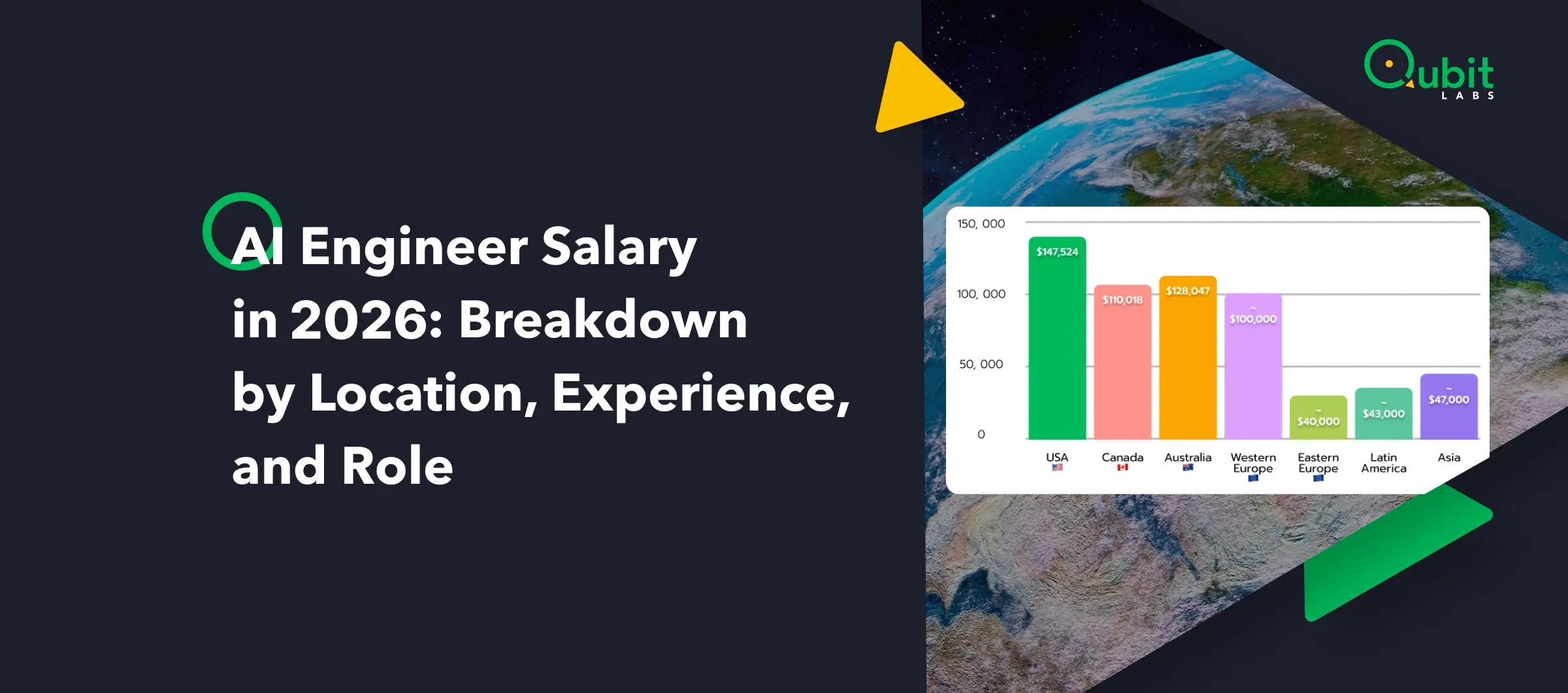
Salary benchmarks: $130,000 annually in the USA vs $55,200 in Poland.
Prompt engineers
These experts sit at the exact intersection of the product manager and software engineer roles. They translate business requirements into clear instructions and optimize AI model performance. Demand for these specialists grew by 135.8%.
Salary benchmarks: $115,914 annually in the USA vs $49,900 in Poland.
ML Engineers and LLM Specialists
They are highly valuable because they train and fine-tune AI models, design model architectures, and evaluate trade-offs using their deep judgment. Hiring demand increased by 75% for these roles.
Salary benchmarks: $130,000 annually in the USA vs $55,200 in Poland.
AI architects
These specialists play a key role in defining the AI architecture. They integrate AI into existing business workflows and APIs, ensure compliance with data privacy regulations, and select the most appropriate models and tools for each use case. Demand increased by 156%.
Salary benchmarks: $150,188 annually in the USA vs $76,900 in Poland.
MLOps engineers
MLOps professionals are in high demand as companies move from AI pilots to production, requiring specialists with deep expertise in ML and DevOps.
Salary benchmarks: $161,000 in the USA vs $48,000 in Poland.
Synthetic Data Engineers
They blend real and synthetic data to improve model performance, reduce bias, and deliver more accurate, reliable AI outcomes.
Salary benchmarks: $135,000 in the USA vs $60,000 in Poland.
AI Compliance Officers
They oversee human review processes, coordinate bias assessments, and ensure technical documentation meets regulatory requirements for high-risk AI systems. The EU’s landmark AI Act and California’s Transparency in Frontier Artificial Intelligence Act (SB 53) accelerated demand for these specialists.
Salary benchmarks: $125,000 in the USA vs $55,500 in Poland.
The Roles That Are Shifting

AI and software development are interconnected. With AI coding assistants now at 85% adoption, software development is shifting from manual coding to AI-assisted engineering, enabling faster release cycles and greater productivity.
Junior Developers
In this category, the greatest shift is observed. As Qubit Labs’ experience shows, in 2026, entry-level programmers with foundational AI knowledge are no longer competitive. Research from the Stanford Digital Economy Lab confirms that since the rise of generative AI, employment among early-career professionals (ages 22–25) in %AI-exposed occupations has declined by 16%.
Tech companies don’t hire engineers who just can code; AI fluency is one of the core AI developer job requirements. Our clients are looking for junior developers who can direct AI agents, write precise prompts, review AI-generated code, and spot subtle bugs.
Hiring Shift: Companies hire fewer junior developers and raise the bar so high that entry-level professionals are now expected to perform at what used to be a mid-level standard.
QA Engineers
AI generates unit, integration, and regression tests, so demand for manual QA engineers is declining. On the flip side, tech companies value strategic quality advocates who design test strategies, configure AI testing pipelines, and apply human judgment to complex scenarios.
Hiring Shift: Demand for manual QA engineers is cooling, and AI-testing pipeline experience has become a baseline.
Backend Developers
In 2026, AI can generate CRUD endpoints and boilerplate API code, as well as handle standard integrations. However, complex business logic, distributed systems design, performance optimization, and security architecture remain firmly human territory. The backend developer role in 2026 is about architecture, not implementation, and, over the past three years, 70% of companies have expanded backend developer hiring to support scalable, secure digital infrastructure, according to McKinsey.
Hiring Shift: Companies don’t look for pure implementers. They highlight system design and architecture as core software engineer skills in 2026.
DevOps Engineers
This is the smallest shift of all. Infrastructure decisions require deep understanding of a system’s specific operational context, which AI still lacks. However, AI tools are still crucial for high productivity. Our experience shows that DevOps professionals who don’t use AI for monitoring, incident-response automation, and Infrastructure-as-Code generation now work measurably slower than competitors who do.
Hiring Shift: Demand remains stable, but job postings now increasingly list proficiency with AI development tools as a core requirement.
Product Managers
In our experience, this role has changed the most. The Institute of Product Leadership states that with AI, PMs can automate research, generate the necessary documentation, analyze customer feedback efficiently, and surface insights instantly. These professionals can also generate prototypes and write technical specs that previously required a developer’s involvement.
Hiring Shift: Technical expectations for this role have risen, often including a requirement for prototyping experience.
New Roles That Didn’t Exist Three Years Ago
In 2026, AI in software engineering led to the emergence of new roles focused not on building new features but on owning reliability, compliance, and the orchestration of AI systems. The most sought-after roles are:
- LLM/GenAI engineers
- MLOps engineers
- AI reliability engineers
- AI agent engineers
- AI product managers
- Prompt engineers
- AI agent orchestrator engineers
- AI compliance officers
- Synthetic data engineers
Qubit Labs’ prediction: Grand View Research estimates the global AI agents market at $10.9 billion in 2026 and projects it will reach $182.9 billion by 2033. With the rise of agentic AI, engineering roles will be split into more specialized titles, with a focus on agent-specific security or QA. As for AI compliance officers, they are likely to become permanent roles in organizations.
What Companies Are Actually Looking for Now: The New Hiring Standards
As our hiring expertise shows, tech companies are actively hiring ML engineers, AI/GenAI engineers, AI architects, AI researchers, AI product managers, and AI compliance officers.
“Demand is growing as companies focus on production and scaling AI initiatives. Therefore, they require specific expertise in deployment, security, governance, and business integration,” says Iva Kozlovska, CEO of Qubit Labs.
The New Must-Have AI Skills Across All Roles
The effective use of AI tools is now featured in most job descriptions, regardless of the role. This means it is no longer simply a matter of becoming familiar with AI technologies, but integrating them into day-to-day tasks.
Here is what companies look for in developers in 2026 across various roles.
| Role | Required Skills |
|---|---|
| AI Engineer | Proficiency in Python, R, or Java; strong experience with Amazon Web Services and Cloudera Data Platform; hands-on experience with distributed data processing frameworks such as Spark, Hive, Presto, and Pig; and experience with RAG pipelines, model evaluation, and fine-tuning foundation models. |
| DevOps Engineer | Use of AI-driven engineering practices, familiarity with LLMs, experience with Vector databases such as Pinecone or Weaviate, and experience with GitHub Copilot, Amazon CodeWhisperer, and Amazon DevOps Guru. |
| QA Engineer | Experience using AI-assisted coding and test automation tools (e.g., Cursor, GitHub Copilot, Claude Code), ability to use AI/LLM-assisted test generation, and experience writing prompts, rules, or context for AI coding agents. |
| Backend Developer | Proficiency with AI-assisted development tools (e.g., Cursor, GitHub Copilot, Claude Code), familiarity with LLMs and AI/ML backend integration patterns, and ability to validate, review, and refine AI-generated code. |
Regardless of the role, all employers that hire MLOps engineers, AI/ML engineers, and other roles emphasize effective communication and collaboration skills, as well as excellent analytical and problem-solving abilities, as must-haves.
How Technical Interviews Have Changed
As AI tools become a standard part of every tech role, hiring teams are redesigning technical interviews to evaluate AI skills.
- Interviews evaluate AI literacy as a core engineering skill. The focus now is not about how specialists write code, but how they judge code. This includes assessing how effectively candidates write prompts, validate AI-generated code, troubleshoot inaccurate outputs, and incorporate AI into end-to-end solutions.
- Interview questions changed. Recruiters moved from typical technical assessment questions to custom discussion points that evaluate the depth of understanding of the topic and problem-solving skills.
- Many tech companies use AI in coding interviews. Meta, Google, and other tech giants use AI-assisted sessions in their interviews. Although candidates are allowed to use Claude, Gemini, and ChatGPT during these assessments, evaluation criteria have become harder. Now, recruiters check how candidates break down requirements, their prompting and integration skills, and their review of AI-generated output.
- System design is part of the early interviews. Employers ask candidates to design a specific system to evaluate whether professionals understand how applications interact with LLMs via APIs, the Model Context Protocol (MCP), and similar integration methods.
- Knowledge of when to use AI is part of the assessment. As we see, companies should understand how well engineers understand the limits of AI output, not just how well they use it to generate code.
Qubit Labs’ insights: Companies that focus on deep tech recruitment and adapt their hiring processes to the new AI-driven reality can reduce time-to-hire by up to 40% while improving candidate quality and role fit by up to 50%.
Red Flags in Candidates in 2026

In 2026, interviews became more profound, and AI fluency is the baseline across all roles. However, there are still specific warning signs recruiters take seriously.
- No AI tool usage at all. It shows that a candidate doesn’t keep pace with current advancements in the field and may be unable to adapt to modern engineering practices that use AI-assisted workflows.
- Can’t explain how they verify AI output. Unquestioningly trusting AI-generated code without verification may signal that a candidate lacks critical thinking and sound engineering judgment — key skills for every role.
- Vibe coding without architectural understanding. Coding without understanding how it fits into a broader system signifies AI dependency and weak system design skills.
- Inability to write a clear specification for an AI agent. The inability to break down technical specifications into precise instructions highlights a lack of structured thinking and prompt-engineering skills.
Success story: One of our clients hired a backend developer with strong AI proficiency despite minor gaps in the required tech stack. Thanks to excellent prompt engineering and AI literacy, the developer quickly closed the technical gaps and became fully productive within two weeks, helping the team ship products faster.

What Exceptional Candidates Look Like Now
In 2026, a perfect candidate among our clients is the one who:
- Writes clear specifications for AI agents.
- Verifies output provided by AI.
- Boosts productivity with specific AI solutions.
- Knows the reasons behind every architectural decision.
- Always keeps human judgment a priority and doesn’t overrely on AI.
- Debugs complex issues without using AI tools.
- Has strong communication and problem-solving skills.
Adapting Your Hiring Strategy for the AI Era

Established hiring processes, along with AI-powered screening and scheduling, can reduce hiring time by up to 40%, according to Fountain. If you want to learn how to hire AI-ready developers, follow these practical strategies.
1. Audit Your Current Team
Identify the core team’s capabilities, rate each person on a simple 0–3 scale (none/learning/capable/expert). Then compare those strengths against your business goals to identify critical skill gaps, prioritize hiring needs, and determine where upskilling can close the gap before recruiting externally.
2. Update Your Job Descriptions
Qubit Labs states that concise and relevant job descriptions quickly filter out unsuitable candidates and significantly improve time-to-hire. To write a compelling job description, specify a clear job title, limit your must-have skills to 5-7 critical points, brief the job summary, and clearly list all languages, frameworks, and tools a future employee must use. Also, be transparent about salary ranges and work models. Finally, ensure it is clean and easy to scan.
If you want to get a compliant and relevant job description in seconds, you can use our job description generator. It will provide a job posting aligned with your industry and requirements.
3. Upskill Your Current Workforce
If a skill is thin on a team, then you should upskill your employees. However, don’t rely on generic AI training. TechTarget states that one of the biggest reasons enterprise AI upskilling programs lose momentum is that the training is too generic. Upskilling should be role-specific. For instance, software engineers should learn how to work effectively with AI coding assistants, ensure secure workflows, and review AI-generated code.
4. Find a Staff Augmentation Partner
If the required skill doesn’t exist on your team, then leveraging AI staff augmentation services is a better option. A reputable vendor can provide authoritative guidance on hiring locations and salary benchmarks, help you secure niche talent in weeks, eliminate administrative overhead, and remain competitive for years ahead. The key here is to thoroughly assess all vendors and choose the one with the required industry experience and a proven track record.
Navigate This Shift with Qubit Labs
Thus, the future of software engineering with AI belongs to professionals who can solve complex problems, make sound engineering decisions, and effectively guide AI. Engineering roles are evolving, hiring strategies are adapting, and the skills employers value continue to change. To stay ahead of the curve, find a trustworthy partner that keeps pace with all technological advancements and can help you meet your hiring needs.
Qubit Labs knows the ropes when it comes to hiring niche talent and building high-performing dedicated teams. With a global reach of over 100,000 professionals, a presence in over 18 countries, and extensive hiring expertise spanning 10+ industries, we will help you find the talent you need in weeks. Additionally, you can grow sustainably with us, as we cover team scaling, HR administration, payroll, and compliance. Ready to build a team that thrives in the AI era? Schedule a free call, and let’s map out your hiring strategy.