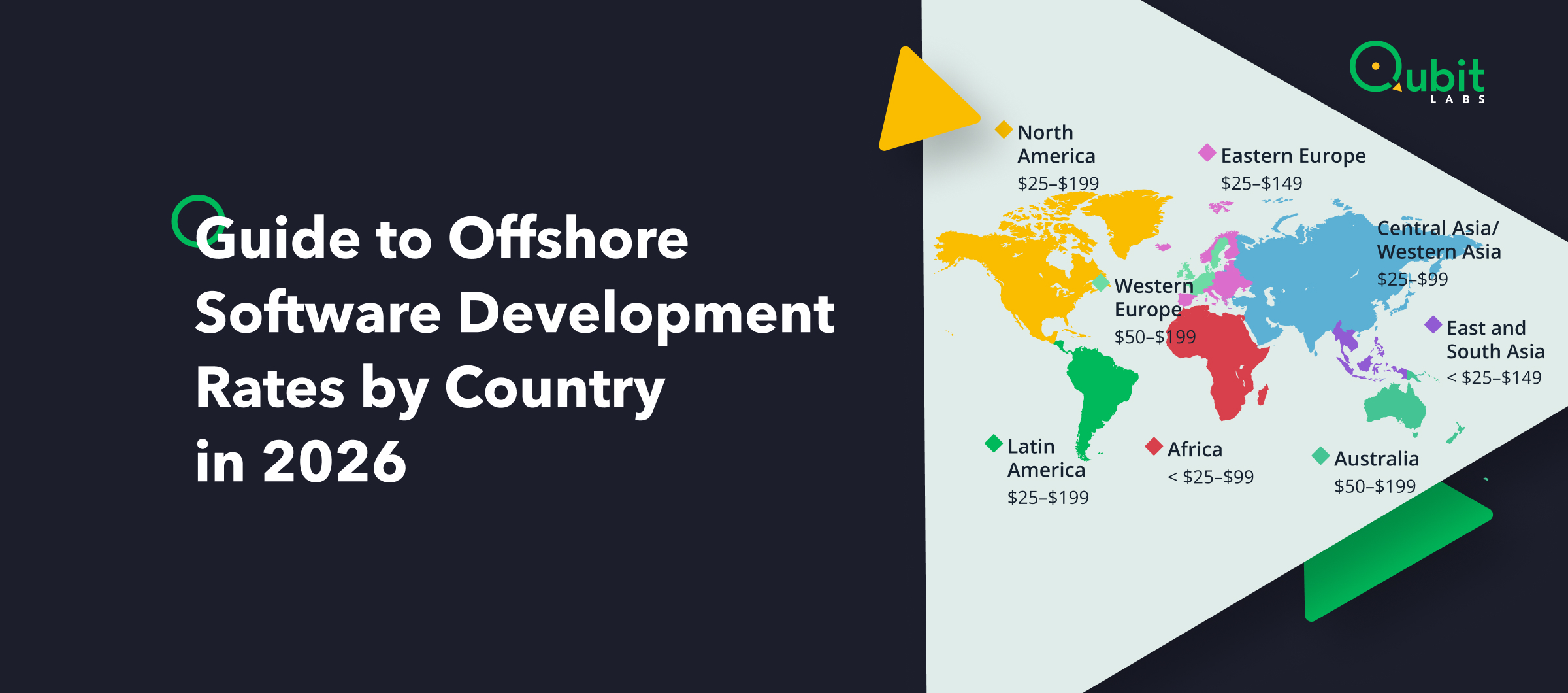
Latin America has emerged as a top nearshore destination for North American companies, with over 70% of US tech companies having already outsourced to Latin America or are considering doing so. The local tech scene is rapidly developing, and innovative advancements in 5G, robotics, blockchain, augmented reality, and Artificial Intelligence are fueling its growth.
Time zone and cultural alignment, a vast talent pool, robust tech expertise, and ongoing digital transformation, along with government initiatives, make outsourcing to Latin America a top choice for global companies looking to gain a competitive edge. However, companies should be aware of specific considerations when outsourcing to Latin America.
This article explains why outsourcing in Latin America is a top choice for companies seeking innovative solutions at competitive rates, a reliable nearshore destination with geographical and time zone proximity, robust infrastructure development, and rapid scalability. It also provides a glimpse into Latin American market trends, overviews of top countries in the region that offer high-quality deliverables, local development rates, and advice on how to address the most common challenges.
Latin America’s IT Outsourcing Market: Growth and Trends

Latin America is home to numerous offshore software development companies that offer a range of IT services at competitive rates. Here is a brief overview of the Latin American outsourcing industry.
Regional Market Overview
- By 2030, the Latin American IT services outsourcing market is anticipated to generate US$126,320.9 million in sales.
- With a projected revenue of US$152.81 billion in 2025, the United States is expected to lead the business process outsourcing market in Latin America.
- Customer service and technical support are two of the most common services provided by LATAM-based BPO and GBS centers.
- With an IT outsourcing market value of USD 32292.7 million in 2024, Latin America accounted for almost 5% of worldwide revenue.
Country-Specific Insights
- Mexico is renowned for its robust tech ecosystem, robust tech education, and vibrant startup culture. Mexico’s digital economy generates approximately USD 60 billion in economic value annually through various services.
- Brazil is the region’s leader with a stable economy, strong tech education, and robust digital infrastructure. The market prioritizes investments in IoT, AI, cloud computing, and 5 G technologies.
- Argentina has a rapidly evolving technology sector driven by a tech-savvy workforce and a strong entrepreneurial culture. It is known for favorable tax rates and diverse initiatives that attract investment to the IT sector.
Key Growth Drivers
- The IT services market in Latin America is mainly expanding due to innovation. Businesses are making significant R&D investments to develop innovative products and services tailored to the specific needs of Latin American companies.
- Government initiatives, such as tax benefits and startup funding, fuel the growth of the outsourcing industry.
- A vast talent pool of over 2,200,000 developers proficient in cutting-edge technologies attracts foreign investment.
- Cost-effectiveness, as well as cultural and geographical proximity, make LatAm outsourcing services a key option for US businesses.
Key Benefits Compared to Other Outsourcing Regions
Tech companies that outsource to South America can reap the numerous benefits this region offers. Here are some of them.
Geographical and Time Zone Proximity
Most Latin American countries operate in the same time zone as the US or have a time difference of 1 to 3 hours. The USA operates across nine time zones. Mexico is a perfect choice for LatAm nearshoring, as it operates in the Central and Mountain Time Zone, similar to the USA. Brazil has four time zones, ranging from UTC-2 to UTC-5.
Geographical alignment allows for frequent in-person visits. For instance, it takes 9 hours and 40 minutes to get from New York to São Paulo. The flight from Orlando, Florida, to Mexico City will take 3 hours and 39 minutes.
Competitive Rates
Our experience shows that businesses can save up to 70% by choosing Latin America as their primary outsourcing destination. Labor costs in Latin America are significantly lower than those in the United States, but the quality of services is high. For instance, the average annual AI engineer salary in the USA is $147,524. In Brazil, AI specialists earn $41,250; in Mexico, their yearly salary is $58,075, and in Argentina, AI developers earn $55,900.
Entrepreneurial Spirit
The startup landscape is vibrant, and the number of tech startups has increased by 30%. The fintech sector is the most developed, with Brazil having the most significant number of fintech companies. Diverse seed-stage funding initiatives, mentorship, and acceleration programs with unique networking opportunities, and government programs contribute to the development of the startup ecosystem.
Robust Infrastructure
Major cities in Latin America have numerous technological parks and accelerators, offering robust IT infrastructure for efficient remote collaboration. The region boasts extensive internet coverage, and 5G mobile connections are also gaining momentum. Brazil is expected to have the largest percentage of 5G mobile connections in Latin America by 2030. Additionally, many companies have the necessary space and systems to onboard new customers and scale tech teams swiftly without incurring extra investment.
Developed Tech Network
Software outsourcing in South America enables businesses to capitalize on the unique opportunities that the largest Latin American outsourcing destinations offer.
Argentina ensures access to over 3,800 IT companies, 15 IT and R&D centers, and numerous tech parks.
- Brazil is home to over 15,000 IT companies, 25+ IT and R&D centers, and more than 80 technology parks.
- Mexico hosts 12,000 IT companies, 30 IT and R&D centers, and an emerging tech hub, Querétaro, which has a $5 billion investment from Amazon into cloud infrastructure.
- Let’s analyze the benefits of nearshore outsourcing in LatAm vs offshoring to Eastern Europe and Asia and explore what each outsourcing model offers.
Let’s analyze the benefits of nearshore outsourcing in LatAm vs offshoring to Eastern Europe and Asia and explore what each outsourcing model offers.
| Factor | Nearshoring to LatAm | Offshoring to Eastern Europe | Offshoring to Asia |
|---|---|---|---|
| Cost Efficiency | Competitive labor costs, which can be up to 70% lower than in the USA, and a transparent pricing structure. | Competitive developer salaries and the absence of hidden costs. | Low initial investment, but there can be hidden expenses and a lack of transparency. |
| Time Zone Alignment | Favorable time zone with a few hours difference. | The time difference is substantial, ranging from 6 hours to 10 hours. | The time difference is 10-16 hours, resulting in communication issues. |
| Cultural Compatibility | Excellent. Latin American specialists adhere to the same business practices, fostering strong partnerships that drive growth and development. | Moderate to high. Eastern European software engineers generally follow a similar communication and management style. | Medium to low. Specific differences in communication and management styles require adjustments. |
| IP Protection | Close alignment with US legal frameworks. | EU standards ensure IP protection. | Varies by country, and the reinforcement strategy is weak. |
| Talent Pool Size and Quality | A bilingual talent pool of 2,200,000 specialists proficient in Java, JavaScript, Python, C#, PHP, and Angular. | A talent base of 1,200,000 IT specialists well-versed in Java, JavaScript, Python, PHP, Node.js, and AWS/Azure. | 1,300,000 developers demonstrate solid knowledge of React, Java, Python, JavaScript, PHP, and .NET. |
| English Proficiency | From low to high. | From moderate to high. | From low to high. |
| Control | Perfect oversight due to geographical and time zone proximity. | Time zone differences may limit real-time control. | Low control. Clear documentation and regular, comprehensive reports are required. |
| Scalability | Moderate, as there can be a limited supply of specialists with the necessary skill sets. | High due to the availability of highly skilled talent across different regions | A well-developed IT industry with numerous agencies and established processes guarantees seamless scalability. However, there can be quality issues. |
Top Countries for Outsourcing in Latin America

American companies that choose nearshoring vs offshoring often opt for Latin American countries. The main reasons are their proximity to the US in terms of time zones, their cultural compatibility, strong technical expertise, and more affordable costs. Let’s briefly analyze the best LatAm countries for outsourcing.
Mexico
Mexico is a top destination for businesses that decide to outsource to Latin America, due to its strong ecosystem, which features numerous accelerators and incubators, with over 1,000 new startups emerging annually. In the Global Innovation Index, Mexico ranks 3rd out of 20 Latin American and Caribbean economies. Nearshore software development in Mexico also allows companies to access both popular and niche technical skills, which is perfect for ambitious startups.
- Talent Pool: 800,000 tech experts.
- Tech Expertise: full-stack development, database management, game development, and blockchain development.
- Tech Trends: Artificial Intelligence and automation.
Argentina
LatAm outsourcing, particularly working with Argentine companies, is a go-to option for businesses due to the country’s skilled workforce and a strong tech ecosystem, with an impressive 97.68% coverage of 4G networks. Additionally, Argentina boasts a vibrant startup ecosystem. In 2024, Argentine startups raised $2.8 billion in funding, marking a consistent increase in financing.
- Talent Pool: 150,000 tech specialists.
- Tech Expertise: Full-stack web development, enterprise systems, and critical software.
- Tech Trends: AI, agritech, and e-commerce.
Brazil
Brazil is typically the most popular choice for IT outsourcing in Latin America due to its robust tech landscape, supported by diverse government initiatives, innovations in healthtech, fintech, and e-commerce, and a substantial number of specialists proficient in various technologies. The country’s leading sub-sectors are AI, IoT, cloud, security, and edge computing. Businesses can hire software developers in Brazil to build advanced solutions in cybersecurity, cloud computing, and Artificial Intelligence.
- Talent Pool: 630,000+ tech specialists.
- Tech Expertise: front-end, back-end, and full-stack development, and mobile app development.
- Tech Trends: Cybersecurity, cloud computing, and AI.
Colombia
Latin American outsourcing, particularly to Colombia, enables companies to leverage a unique blend of innovation and cost efficiency. This country boasts a substantial number of tech graduates and a vast pool of tech professionals who demonstrate exceptional knowledge of Python, Java, JavaScript, and C#. Additionally, Colombia boasts an active entrepreneurial ecosystem, with 1,582 startups.
- Talent Pool: 165,000+ tech specialists.
- Tech Expertise: Back-end and enterprise development, web development, blockchain, and data science.
- Tech Trends: e-commerce and blockchain.
Chile
Chile’s tech scene is thriving. The Chilean government has announced a $4 billion investment strategy to make Chile the top location for data centers in Latin America. A local talent pool is vibrant and offers a unique combination of a strong STEM education and perfect soft skills. In the talent market, specialists with AI, cybersecurity, and cloud are in the highest demand.
- Talent Pool: 61,000+ tech specialists.
- Tech Expertise: Back-end development, web app development, and enterprise development.
- Tech Trends: AI, cybersecurity, and cloud computing.
Cost of IT Outsourcing to Latin America
IT outsourcing in Latin America is known as a cost-efficient location. Compared to similar offerings in the US or Western Europe, development costs are usually 30–50% lower. Let’s analyze the average salaries for mid-level specialists with the most popular tech stacks worldwide and discover what your cost savings would be if you choose software outsourcing in Latin America.
| Country/ Technology | Python | JavaScript | C++ | PHP | Java |
|---|---|---|---|---|---|
| Argentina | $3,500 | $3,500 | $2,700 | $2,400 | $3,000 |
| Mexico | $2,400 | $2,400 | $2,400 | $2,400 | $2,200 |
| Brazil | $2,600 | $2,700 | $2,500 | $2,500 | $2,800 |
| Bulgaria | $3,000 | $2,800 | $2,700 | $3,000 | $3,000 |
| Portugal | $4,000 | $4,000 | $4,000 | $4,500 | $3,900 |
| Georgia | $2,300 | $2,500 | $2,500 | $2,500 | $2,300 |
| Malaysia | $3,200 | $3,200 | $4,000 | $2,000 | $2,000 |
| USA | $9,800 | $9,500 | $9,500 | $8,800 | $9,200 |
Thus, building remote teams in many Latin American countries can lead to significant cost savings.
- The cost of hiring a Python developer in Argentina is 64.29% lower than in the USA. In Mexico, this figure reaches 75.51%, and in Brazil, it’s 73.47% lower.
- For JavaScript developers, salaries are 63.16% lower in Argentina, 74.74% lower in Mexico, and 71.58% lower in Brazil compared to the U.S.
- C++ developers charge 71.58% less in Argentina, 74.74% less in Mexico, and 73.68% less in Brazil.
- The rates for PHP software engineers are 72.73% lower in both Argentina and Mexico, and 71.59% lower in Brazil.
- Java specialists earn 67.39% less in Argentina, 76.09% less in Mexico, and 69.57% less in Brazil compared to their U.S. counterparts.
How to Find the Right IT Outsourcing Partner in LATAM

To make the most of outsourcing to Latin America, you should find a reliable vendor that will meet all your current needs and support you in your future endeavors. Here are the best practices to follow when planning a long-term and establishing flourishing cooperation with the right outsourcing partner in Latin America.
1. Identify Your Goals
Companies opt for outsourcing in Latin America for various reasons. You can opt for Latin American countries to:
- Reduce operational costs without compromising quality.
- Leverage the unique expertise of Latin American workers to develop solutions across different sectors and fill skill gaps in cybersecurity and AI.
- Scale business operations swiftly by accessing a flexible workforce and robust IT infrastructure.
2. Assess a Potential Vendor’s Experience
To ensure smooth cooperation and the delivery of cutting-edge solutions, a company should have relevant experience and skilled professionals on board to bring the client’s ideas to life. Here is a brief checklist of what you should consider:
- Check the relevant certifications for the needed skill sets. For instance, if you want to outsource cybersecurity solutions, ensure that the vendor holds certifications such as CISSP, CISA, and CISM, as well as other relevant qualifications.
- Analyze the vendor’s case studies to see if the company has completed similar software development projects and if it has the necessary expertise. For instance, if your business operates in fintech, an outsourcing company should have a proven track record of delivering solutions for fintech startups, investment platforms, and other related services.
- Read testimonials to get real-world validation of the company’s ability to deliver on time and within a specified budget. Additionally, it provides insights into a service provider’s ability to scale a development team efficiently and highlights potential red flags.
3. Assess Communication Skills and Cultural Affinity
The English language proficiency in Latin American countries ranges from low to high. Therefore, when choosing a vendor, validate its English skills for seamless communication. Effective communication enables businesses to build cohesive teams, scale rapidly, and retain top talent. Despite the generally high cultural affinity of Latin American developers and their US colleagues, we recommend checking it to ensure that in-house and outsourced workers follow the same standards.
4. Analyze the Pricing Structure
Software outsourcing in Latin America is a cost-effective strategy. However, when choosing a potential partner, learn more about the budgets it works with and the pricing structure. A reliable company will offer flexible agreements to meet your evolving outsourcing needs. Additionally, it will provide you with a clear payment framework, including a detailed breakdown of the service fee and the salaries of your remote developers.
5. Verify Security and Compliance Measures
Though data protection measures can be inconsistent in Latin America, it’s essential to verify the vendor’s credibility and its adherence to legal and compliance standards. To ensure data security, reputable vendors must comply with GDPR and HIPAA, and have comprehensive backup plans and security protocols in place to guarantee data security and integrity. Additionally, to safeguard sensitive information, IT companies must sign a non-disclosure agreement (NDA) and specify the intellectual property (IP) rights in their agreements.
6. Partner with Scalability in Mind
Latin America is an ideal region for establishing long-term relationships, and the expertise of local vendors, combined with the region’s robust infrastructure, enables effortless scalability. Learn about the expansion strategies your potential partner offers and evaluate how quickly it can meet your evolving needs.

Red Flags to Watch Out for:
- Inconsistent communication.
- Quality issues.
- Slow decision-making and missed deadlines.
- The use of outdated solutions increases the risk of a data breach.
- A high turnover rate.
- A lack of experience and expertise.
- Vague agreements without the indication of the timelines, costs, and deliverables.
- The absence of robust security protocols.
- Limited flexibility.
- One-size-fits-all methodology.
Potential Risks and How to Overcome Them

Outsourcing to Latin America has several advantages, but it also has some drawbacks. Qubit Labs, your trusted partner in LatAm outsourcing, will guide you through various challenges, ensuring your outsourcing experience is enjoyable.
Legal, Security & Operational Considerations
These aspects are crucial for efficient outsourcing to Latin America. Let’s briefly analyze them.
- Classifying employees as either contractors or employees is crucial for ensuring legal compliance and fulfilling all relevant obligations.
- Each country in Latin America has its own legal, labor, and tax rules.
- While the region has IP laws, their enforcement is inconsistent across Latin American countries.
- The region’s rapid digitalization outpaced its cybersecurity capabilities, resulting in the lowest score in cybersecurity commitments and making it the least protected region globally.
Solution
To mitigate these risks, it’s vital to partner with a reliable counselor who is thoroughly familiar with all the legal, labor, and compliance aspects. To protect your intellectual property rights, draft comprehensive contracts that indicate IP ownership, and sign an NDA before commencing any cooperation.
To ensure optimal data security, look for a company that implements authorization controls and multi-factor authentication. It should also run automated security tests to identify vulnerabilities and prevent data breaches, leverage encryption and tokenization strategies to protect data, and have backup and recovery plans in place to guarantee a quick response to emergencies.
Inconsistent English Proficiency
Latin American countries have varying levels of English proficiency, ranging from low to high. This inconsistent language knowledge can result in misalignment and a lack of transparency.
Solution
To address this issue, partner with a company that provides specialists with profound English skills and experience working with American companies. If outsourced staff lack specific knowledge, you can implement training courses to improve communication efficiency. Also, establish clear communication channels for each type of conversation.
Quality Concerns
When outsourcing to Latin America, inconsistencies in development and quality control issues may arise, as developers may adhere to different standards and practices in some cases.
Solution
Before signing an agreement with a vendor, conduct extensive research. Scrutinize case studies, analyze the provider’s expertise, and establish clear expectations. Additionally, it’s vital to outline specific quality indicators from the outset to objectively assess the work of the Latin American teams and conduct regular audits to monitor progress.
Political and Economic Instability
While the region is known for its stable growth, countries such as Ecuador and Venezuela experienced certain instability that can be deleterious to businesses.
Solution
Hire developers in Latin American countries with a stable political situation and steady economic growth. These countries usually support their digital transformation and invest in the development of the IT sector, offering diverse funding programs and tax incentives. Additionally, to mitigate any risks, include protective clauses in contracts that outline how business relationships will evolve in the event of an emergency.
Competition for Top Talent
Globalization and an IT talent shortage have increased the demand for top-tier talent, particularly in areas such as AI, data science, and cloud computing. This drives up the salaries of developers and makes retention more challenging.
Solution
To secure and retain high-caliber talent, offer competitive compensation, generous benefits like health insurance, flexible working hours, paid holidays, and more. Also, provide clear career advancement prospects and opportunities to work in an innovative and dynamic environment. Additionally, foster a positive, people-centric business culture, as Latin Americans value strong interpersonal relationships and a sense of community.
Try Risk-Free IT Outsourcing to Latin America with Qubit Labs
Thus, Latin America has a booming IT services industry, with this sector accounting for almost 5% of global revenue. By outsourcing to Latin America, businesses can access talented developers in the same time zone and with perfect cultural compatibility who will provide high-quality output at competitive rates.
However, issues such as legal challenges, language barriers, and quality control problems can still arise. To address them effectively, you should find a reliable outsourcing vendor that will navigate you through all the legal and administrative processes and help you find skilled developers to work on your project.
Qubit Labs offers a swift recruitment process, a vast pool of pre-vetted candidates, reasonable and transparent pricing, and flexible agreements that cater to all your needs. Schedule a free consultation call to discuss your idea and make IT outsourcing to Latin America a real success.