
“Hiring and Team Management Challenges of On-Site VS Remote Tech Teams Survey Report 2024,” (View Full Report in PDF) aims to help companies understand the distinct benefits of on-site and remote work models and the associated hiring and team management challenges and make well-informed decisions regarding their workforce strategy.
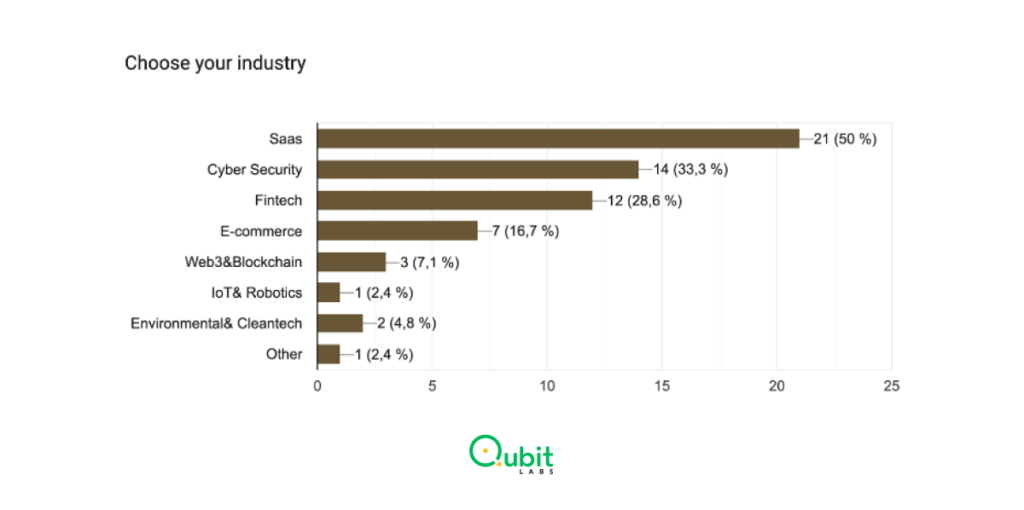
Qubit Labs surveyed 45 small and medium-sized tech company representatives from the USA, UK, Ireland, Eastern and Western Europe, and the Middle East. Our main goal was to analyze companies’ attitudes and approaches to onshore and remote work to determine whether they differ significantly.
During this research, we learned about companies’ main challenges in hiring remote talent, why they hire remote employees or refuse to work with them, and remote team management practices.

Dive in to learn why 75% of tech companies with local teams do not work with remote talents, what challenges tech businesses with remote teams face, and why 77.4% hire talents in Eastern Europe.
Respondent Overview
Technical Profile
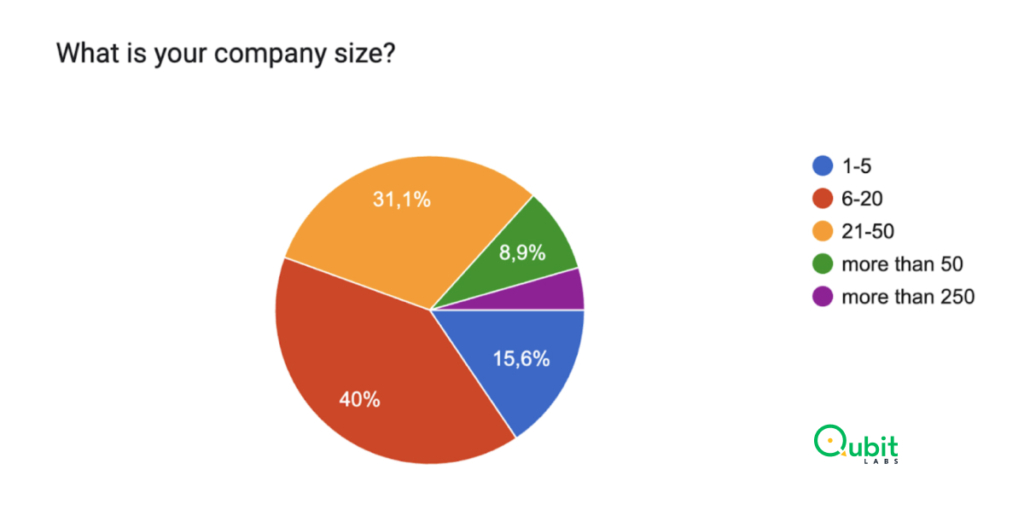
Company Size
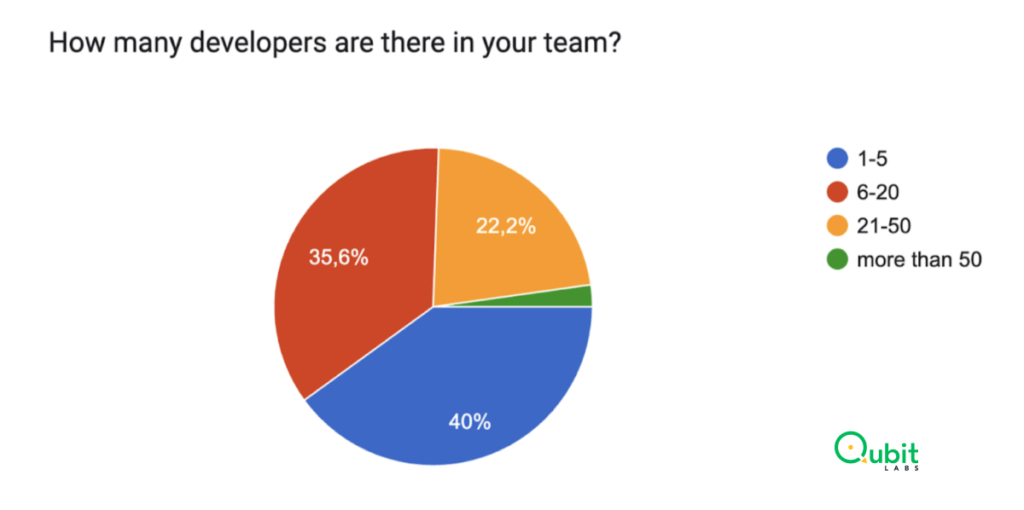
Team Structure
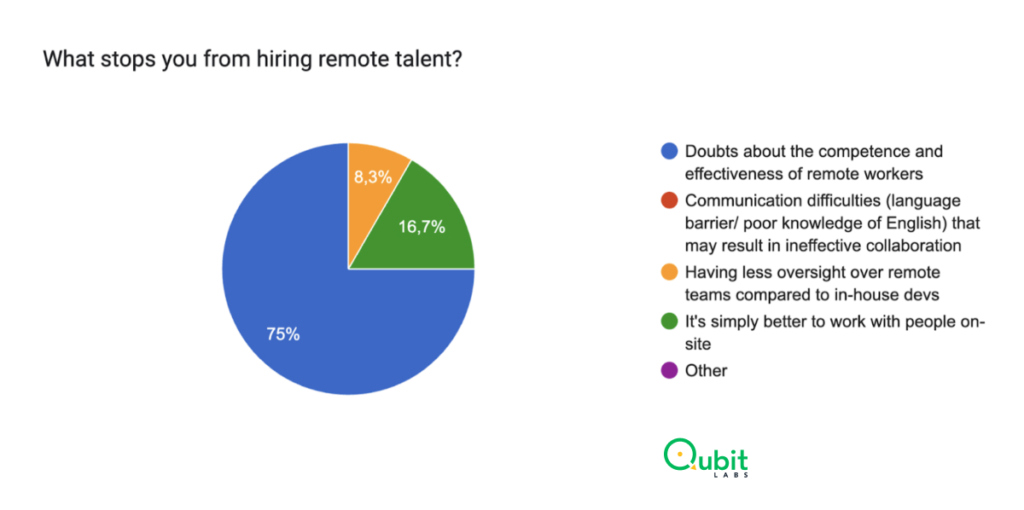
Surprising Stats: 75% of Tech Companies with On-Site Teams Don’t Hire Remote Employees Because They Doubt Their Competence and Effectiveness
Our research shows that surveyed companies with onshore teams that do not hire remote specialists need more confidence in the efficiency and competence of remote employees. Other reasons they do not hire remote teams are communication problems, less control over remote experts compared to on-site employees, and personal preferences.
Besides, some companies stated they had quality assurance issues with remote workers, while others didn’t need remote dedicated teams. At the same time, 81.8% of respondents said they would consider remote hiring if their concerns were resolved.
Only 11.1% Close All Open Tech Jobs by 100%
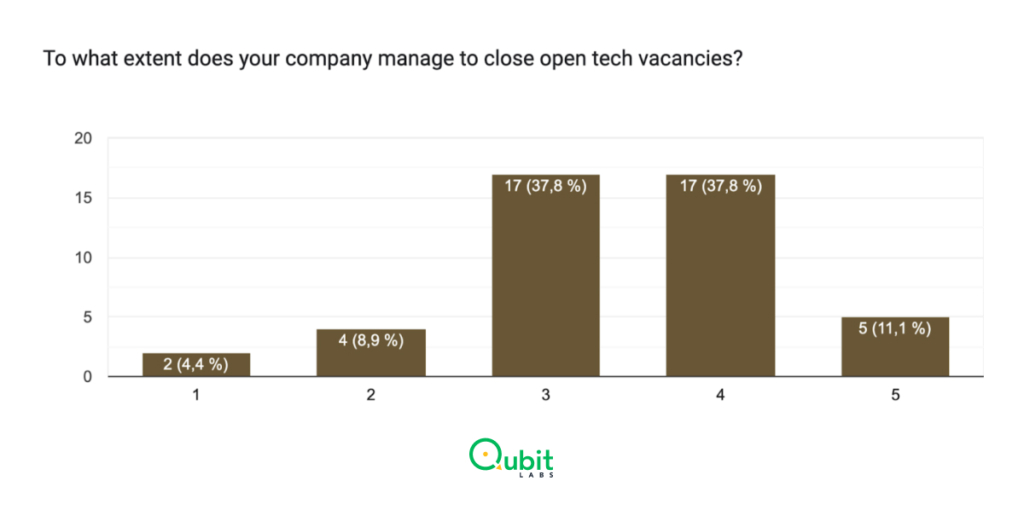
Not all companies can close open technology positions by 100%. For example, 4.4% of respondents close only 10% of tech vacancies, 8.9% close only 40% of job openings, 37.8% of companies close 60% of open tech vacancies, 37.8% manage 80%, and only 11.1% close all open jobs by 100%.
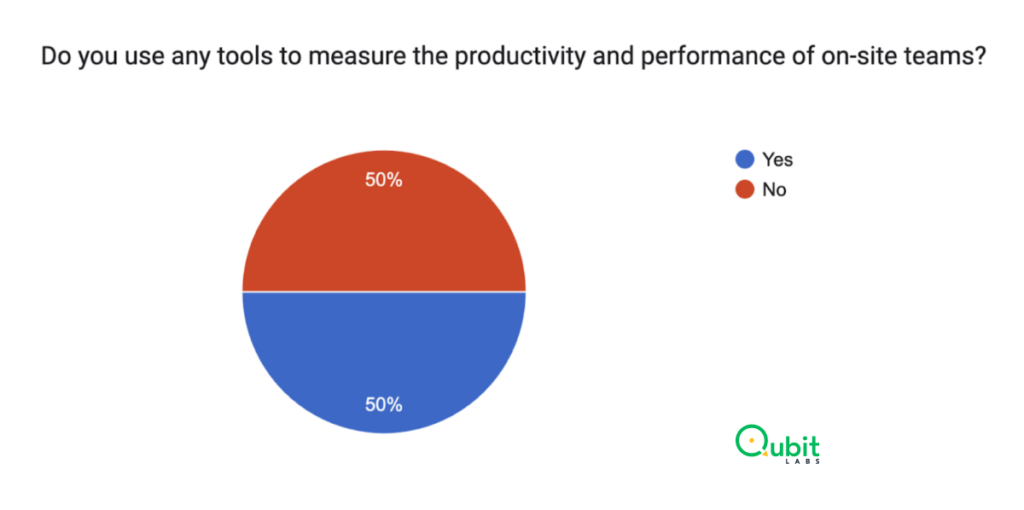
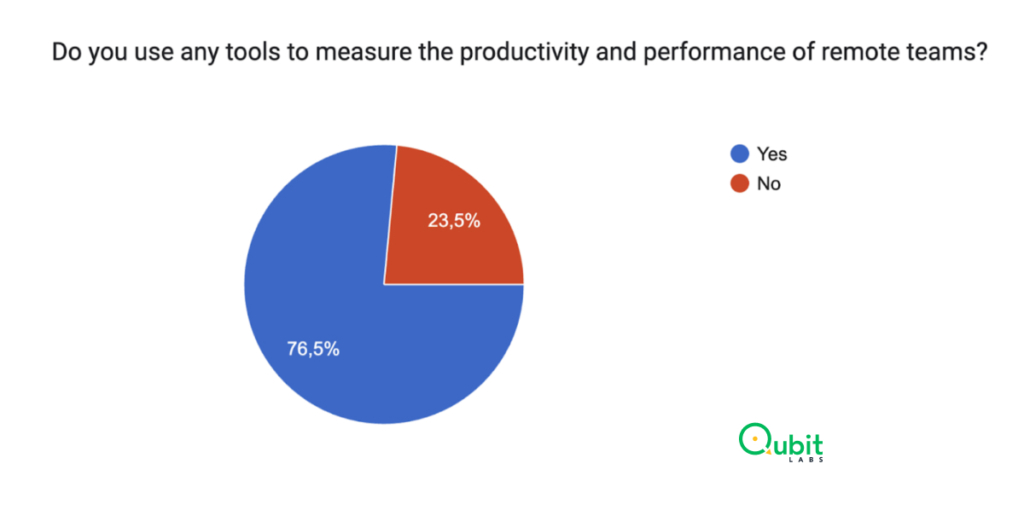
50% of Companies Use Performance Measurement Tools for Onsite Teams, and 76.5% Use Them For Remote Tech Teams
50% of participants responded that they used tools for measuring the productivity and performance of their on-site teams, and 76.5% of companies with remote employees also used them.
None of the Companies Use Time-Tracking Tools to Control the Working Time of On-Shore Specialists, Compared to 37.1% of Companies that Use Them for Remote Teams
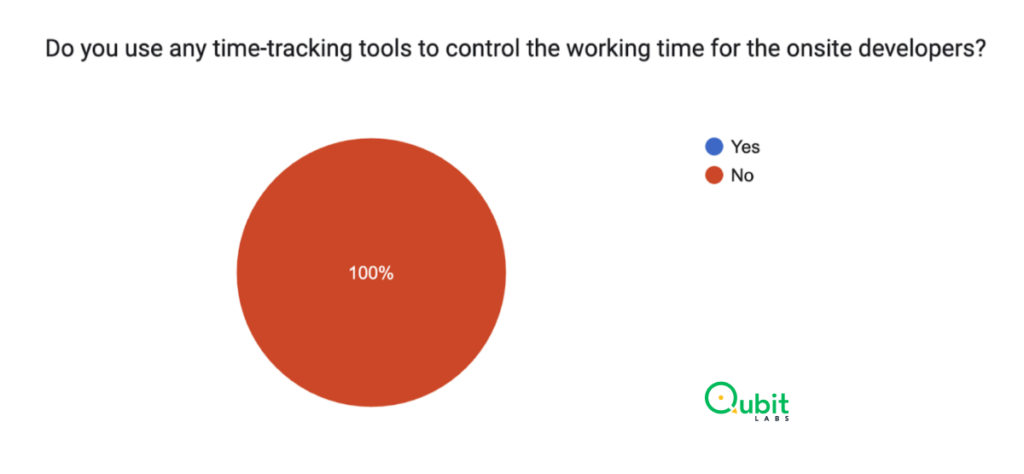
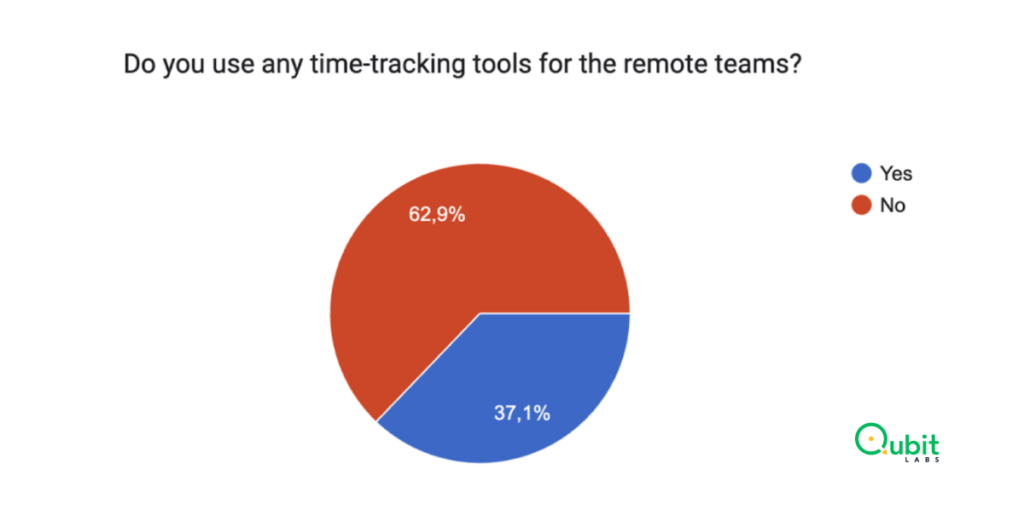
One of the main concerns for companies when refusing to work with remote teams is that they have limited control over them and can experience problems with quality assurance. Therefore, 31.7% of companies with remote workforces use specialized software for managing remote teams.
65% of Companies Use Comprehensive Team-Management Solutions
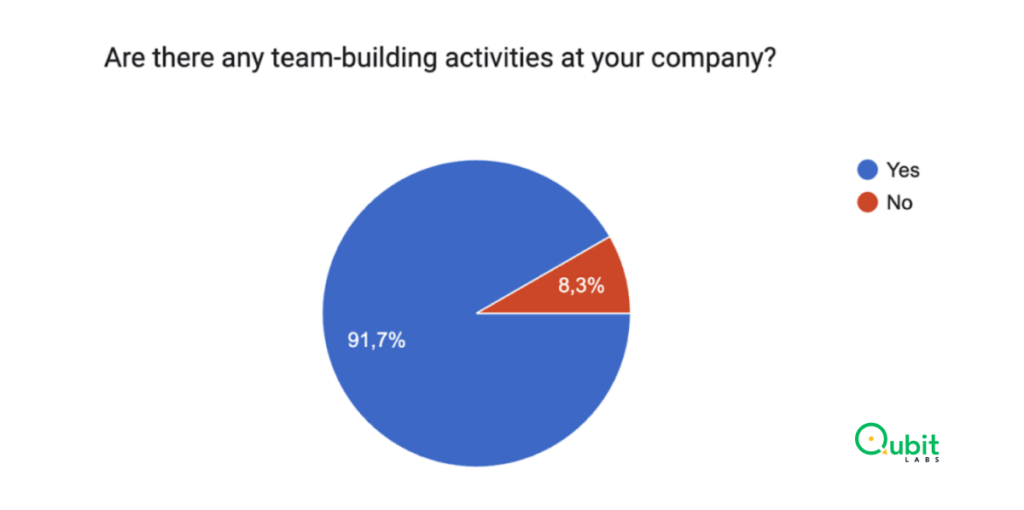
Most companies have a straightforward onboarding process for on-shore specialists and offer various team-building activities. Nonetheless, they experience difficulties with retaining developers. Here are some astonishing stats:
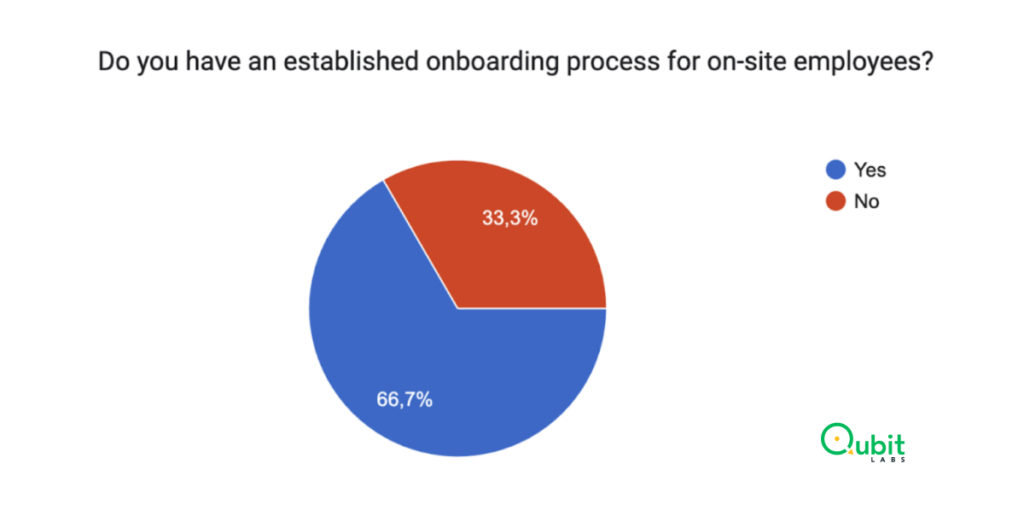
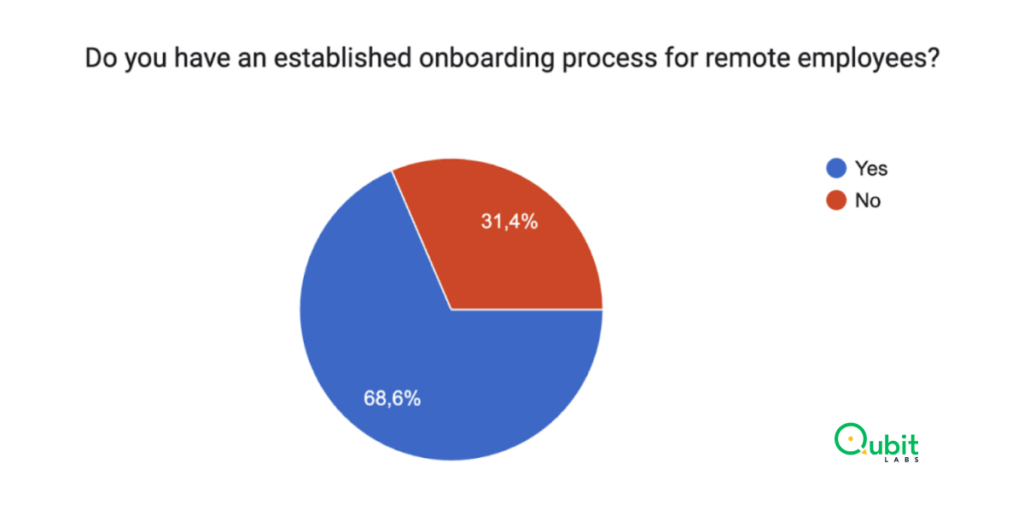
- ~ 32.4% don’t have an established onboarding process for on-site and remote employees, whereas ~ 67% offer a smooth integration for new employees.
- 91.7% of businesses with on-site teams provide a range of team-building activities.
- 66.7% of firms with on-site employees struggle to retain their engineers.
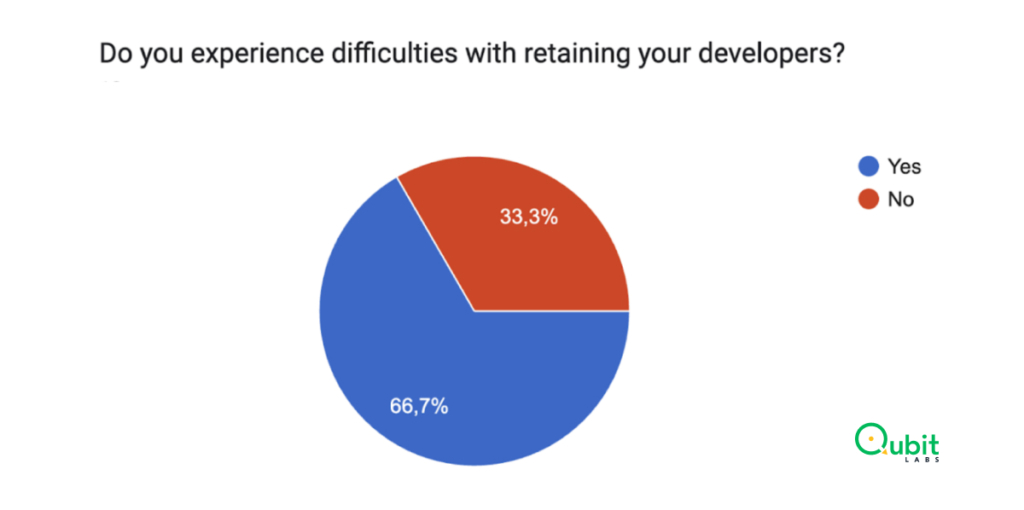
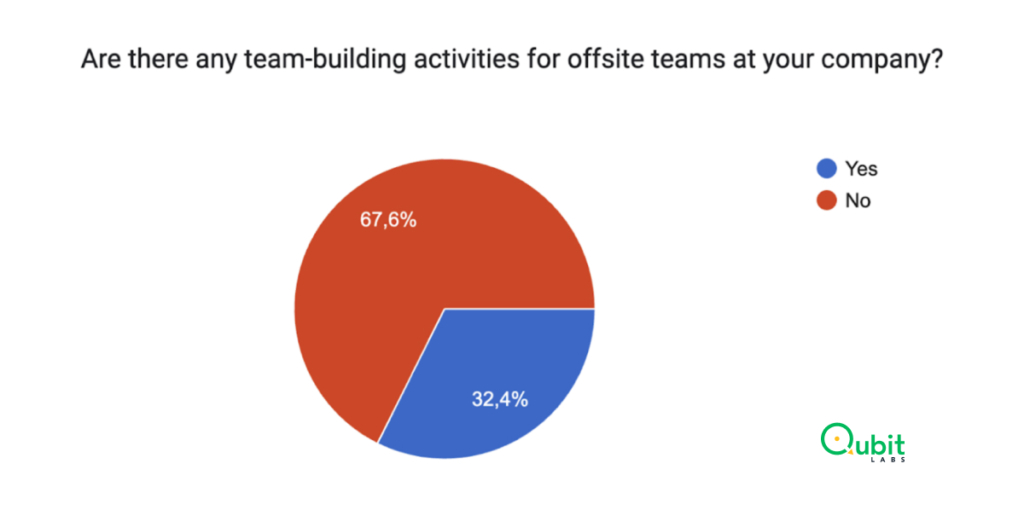
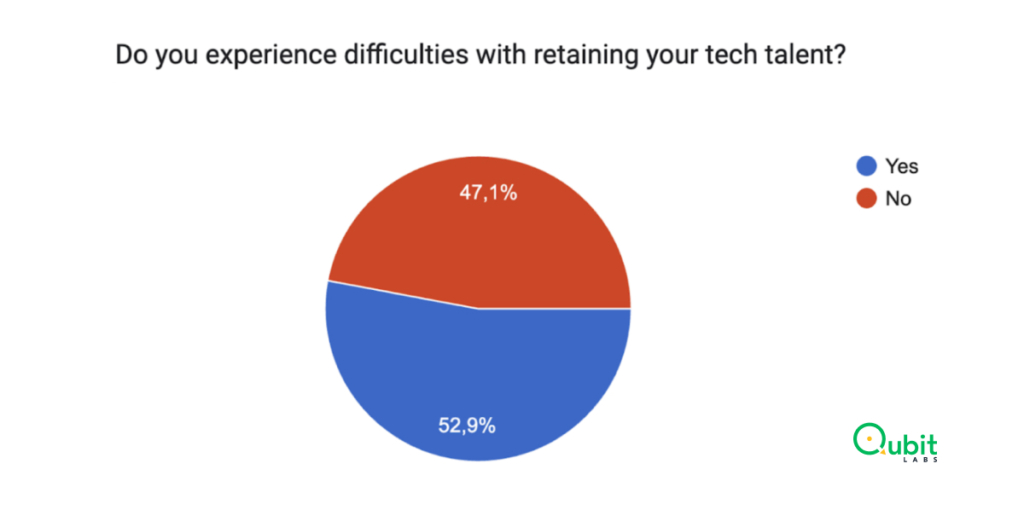
The overall picture is slightly different for tech companies with remote teams. Though only 32.4% of firms organize various activities for their remote workers, a smaller percentage (52.9%) have difficulty retaining talent compared to 66.7% of businesses with local teams.
Only 22.9% of Tech Companies Have Fully Remote Teams
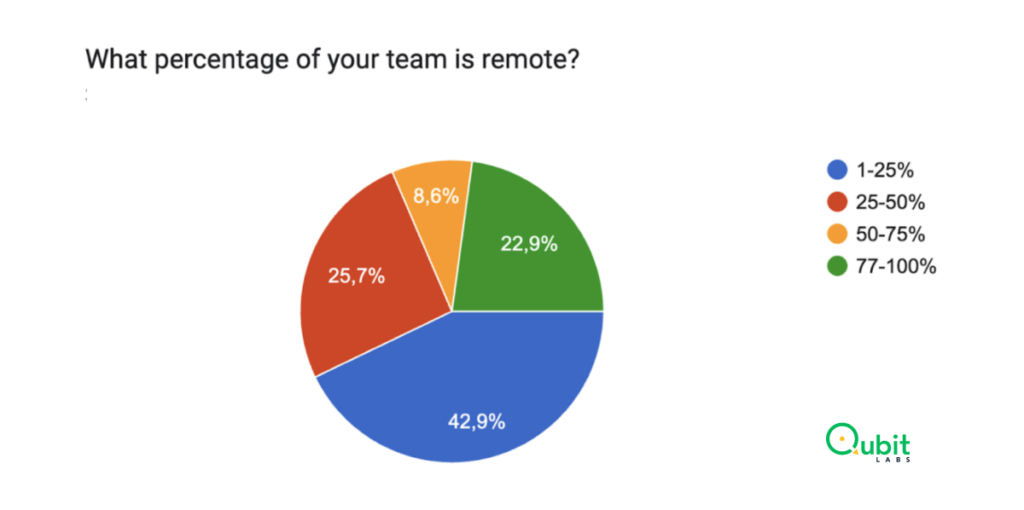
According to WFH Research, in the fall of ‘23, 12% of full-time employees were fully remote, 61% were full-time on-site, and 26% were in a hybrid arrangement. Qubit Labs’ current research shows that 22.9% of the company’s tech teams are 77-100% remote. Besides, 42.9% of employers have 1-25% remote employees, 25.7% of firms have between 25 and 50% remote employees, and only 8.6% of firms have a staff that is 50-75% remote.
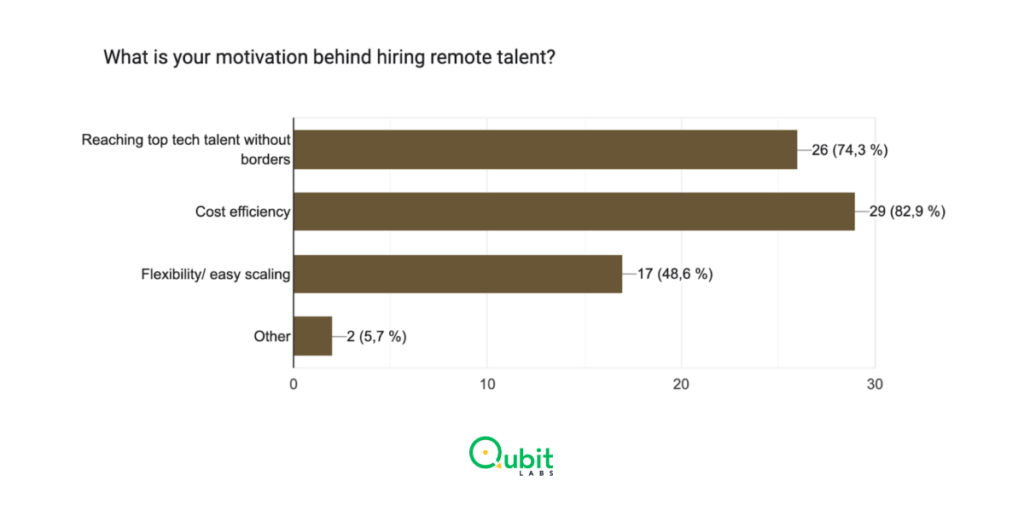
82.9% of Tech Companies Hire Remote Teams Due to Their Cost-Efficiency
Businesses that choose to work remotely are driven by cost benefits, the ability to access a global talent pool, and the ability to scale their teams. Furthermore, remote workers are also valued for their flexibility and adaptability.
77.4% of Respondents Hire Talents in Eastern Europe
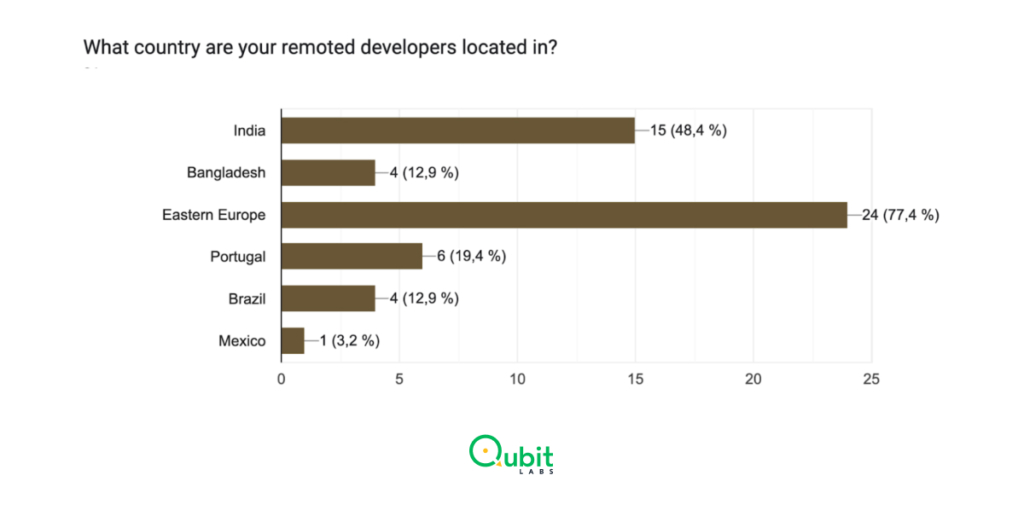
Eastern Europe is a hot spot for hiring remote developers. According to Qubit Labs’ previous research on outsourcing to Latin America vs Eastern Europe, Eastern Europe is known for delivering excellent results at reasonable prices without sacrificing quality. Besides, Eastern European software engineers are highly esteemed in the international tech arena. They frequently come first in prestigious talent evaluations such as HackerRank, TopCoder, and SkillValue.
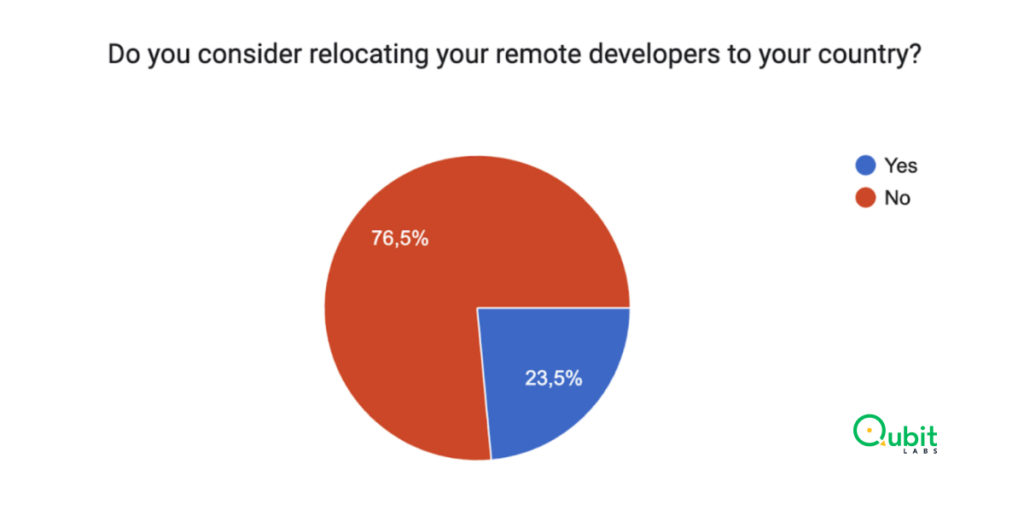
India is second in their ranking (48.4% of companies work there), and Portugal is third (19.4% of firms work with the Portuguese). Other attractive locations are Brazil, Mexico, Bangladesh, the Philippines, Western Europe, South Korea, and the Middle East. Also, most businesses (76.5%) don’t plan to relocate remote developers to their country.
42.9% of Tech Companies Are 100% Satisfied with the Performance of Remote Employees
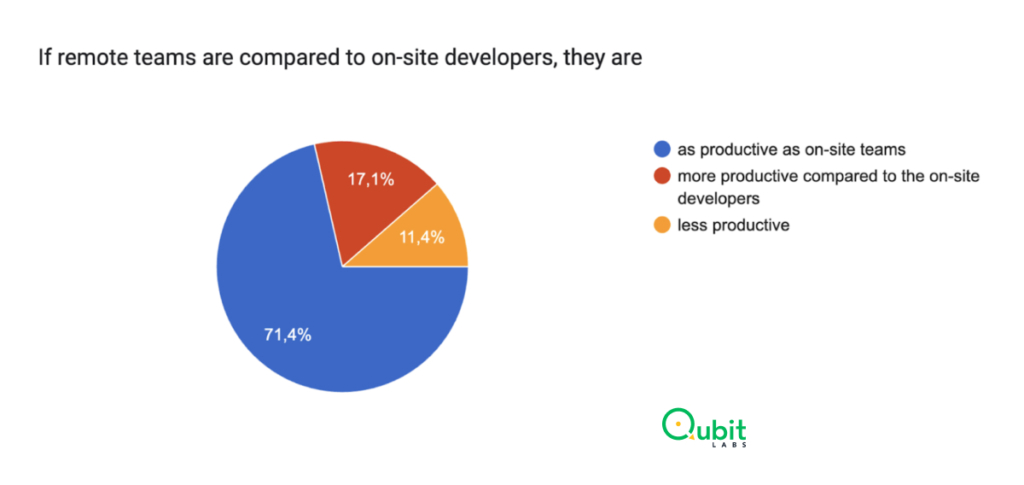
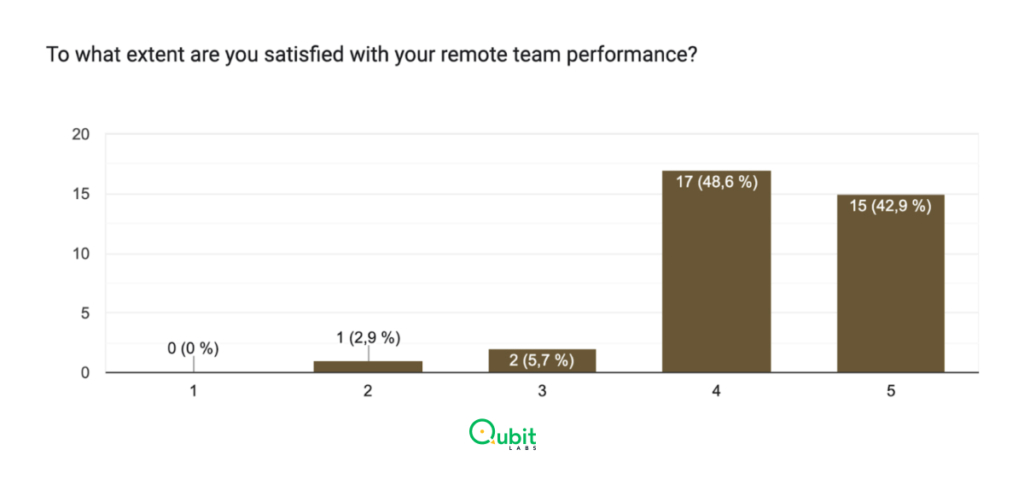
Our research shows that remote work does not affect team productivity and efficiency. 17.1% of tech firms believe that remote developers are more productive than their on-shore colleagues, 71.4% of companies find remote employees as productive as their on-site teams, and only 11.4% of respondents said they are less productive.
Also, 42.9% are 100% satisfied with the work of their remote employees, and 48.6% are 80% content with the results of professional activity. As for other companies, only two respondents answered that they are 60% satisfied with the performance of remote employees, and one company evaluates its satisfaction with the performance of its remote team at 40%.
16.5% of Businesses Have Encountered Certain Challenges with Their Remote Teams
How to manage a remote team? The Scoop 2024 Flex Report predicts that more businesses will embrace flexibility, which boosts employee productivity and engagement while also making it easier to attract top talent. So, partnering with remote teams has excellent benefits, but some downsides remain.
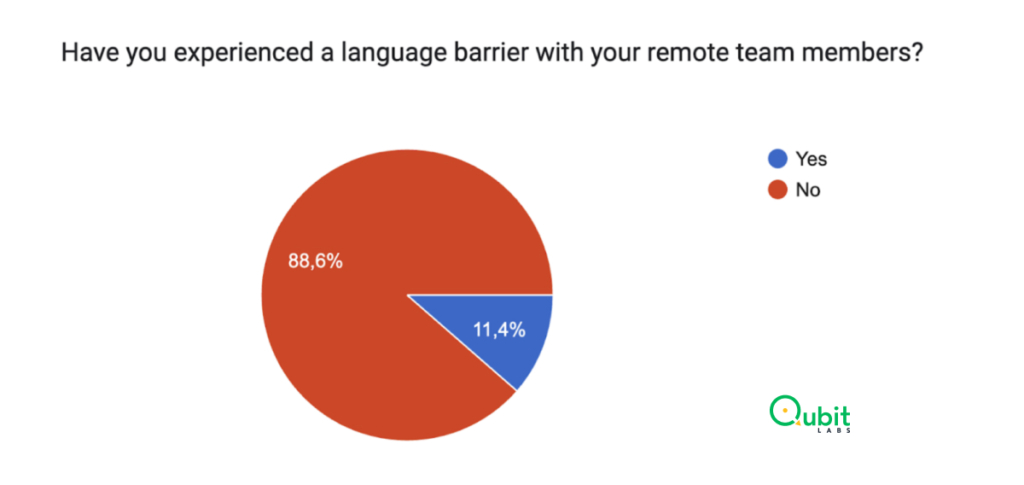
- Nowadays, 11.4% of respondents report a language barrier. This is a very low rate, as 88.6% reported no difficulties communicating with remote teams.
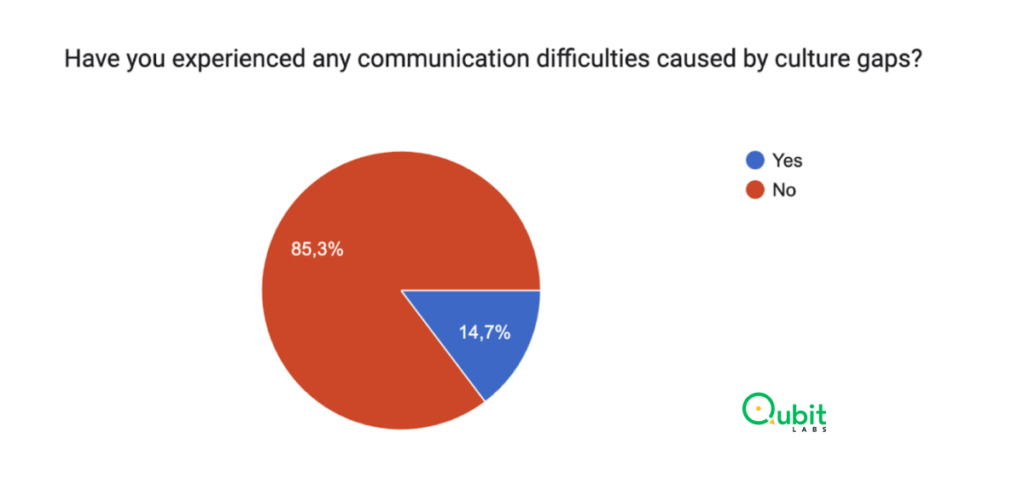
- 14.7% of companies experienced communication issues due to culture gaps, compared to 85.3% of companies that didn’t face any communication difficulties.
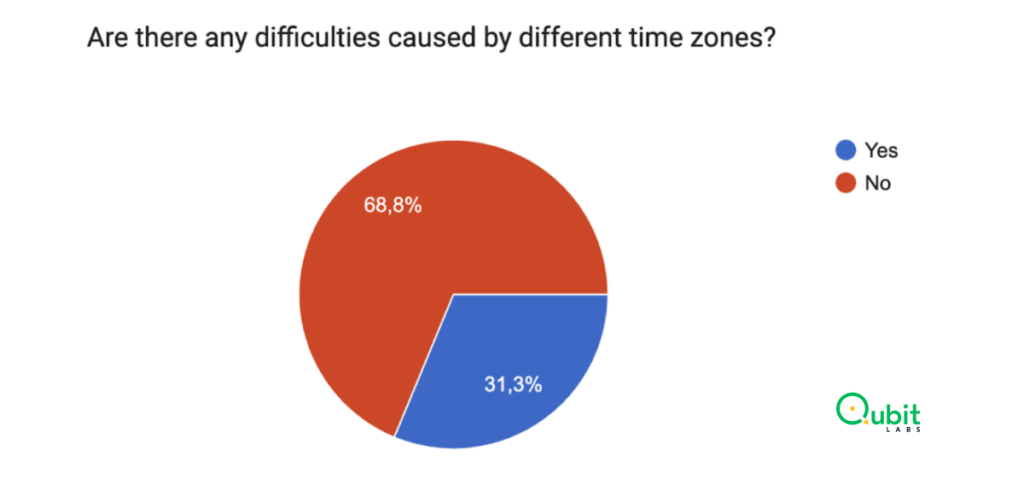
- Time zone challenges are still relevant for 31.3% of companies, while this is not an issue for 68.8% of businesses.
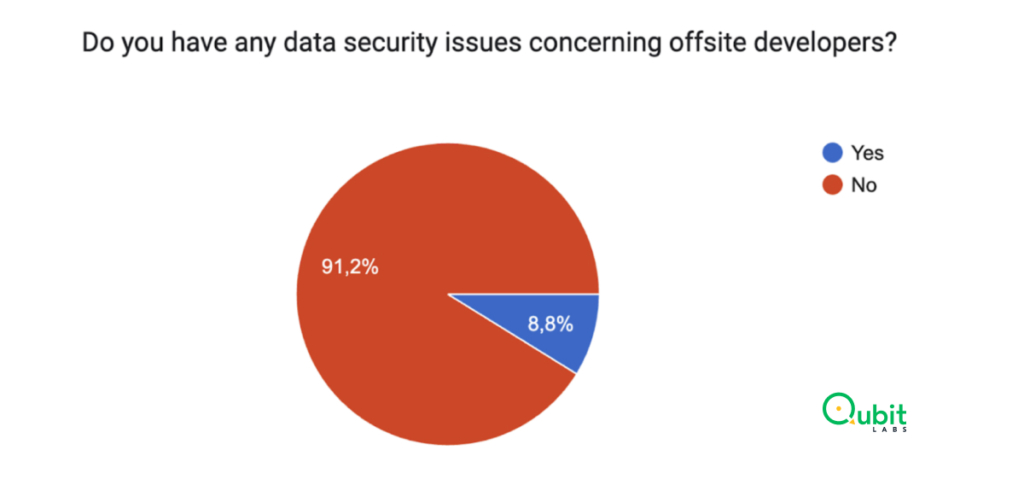
- 8.8% of firms still have security concerns regarding offshore developers, while 91.2% of organizations have no doubts about the reliability of remote developers.
Key Takeaways from the Qubit Labs’ Survey Report
- 64.4% of tech companies agree that startups and small businesses have limited access to top tech talent compared to established companies.
- 60% of small and middle-sized companies with on-site and remote teams have in-house HR departments, which recruit tech team members.
- Only 11.1% close all open jobs by 100%, whereas most respondents (75.6%) close open tech vacancies by 60-80%.
- 75% of tech companies with on-shore teams do not hire remote specialists because they doubt the effectiveness and competence of remote talents.
- 50% of businesses leverage performance measurement tools for onsite teams, and 76.5% use managing remote team best practices.
- 65% of businesses use comprehensive team-management solutions.
- Both tech companies with local (66.7%) and remote teams (52.9%) experience difficulties with retaining tech talents.
- Most companies (68%) have established an onboarding process for on-site and remote employees.
- 100% of businesses do not use time-tracking tools for controlling local developers, but 37.1% of firms use working with remote teams best practices (time-tracking tools are one of them).
- 71.4% of companies find remote employees as productive as their on-site teams.
- 22.9% of IT firms have 77-100% remote teams.
- 82.9% of businesses use remote teams because of their cost-efficiency.
- Talents from Eastern Europe are hired by 77.4% of respondents.
- Only 5.7% of respondents are less satisfied with remote employees’ performance. This figure is 100% for 42.9%, and 48.6% of businesses state that their satisfaction level is 80%.
- Only 16.5% of companies faced difficulties in dealing with their remote workers. Among them are a language barrier (11.4%), communication issues due to culture gaps (14.7%), time zone challenges (31.3%), and security concerns (8.8%). However, these numbers are low compared to those that prove the reliability and effectiveness of working with remote developers. For instance, 88.6% haven’t experienced a language barrier with remote teams, 68.8% of businesses do not have any problems regarding time zone differences, and 91.2% are confident in the reliability of remote developers and have no security concerns.
How Can Qubit Labs Solve These Remote Hiring and Remote Team Management Challenges for You?
Qubit Labs, a high-caliber outstaffing company, has filled over 450 vacancies for our clients across the globe. We understand that today, one of the main trends in recruitment is the emphasis on cultural fit. Though technical skills remain vital, a candidate’s ability to align with the company’s values is paramount. Thus, our hiring process always focuses on technical expertise, soft skills, and cultural fit. On top of that, our extensive experience guarantees that we will find a perfect match to tackle your business needs within 4-6 weeks.
Advantages of Partnering with Qubit Labs
- Qubit Labs finds Silicon Valley-caliber professionals at competitive prices.
- By leveraging clear communication protocols, establishing core overlapping hours, and effective project management tools, specialists we hire effectively cope with time zone differences.
- We source talent in ten locations: Ukraine, Poland, Romania, Moldova, Bulgaria, Georgia, Portugal, Azerbaijan, Brazil, and Mexico. Specialists from these areas have a solid command of English and demonstrate great cultural alignment. Therefore, communication problems won’t be an issue for you.
- The onboarding process will be seamless because Qubit Labs provides experts familiar with remote work workflow and time management.
- We manage HR, payroll, taxes, retention, and replacement to make sure you focus only on core business activities.
Bottom Line
As our research shows, tech businesses choose a remote work methodology due to its cost-effectiveness, access to a global pool of talents, exceptional flexibility of specialists, and excellent scalability. Nevertheless, 75% of tech companies with local specialists refuse to cooperate remotely due to insufficient control over developers, doubts about their competence, and communication problems.
64.4% of respondents agreed that startups and small companies had limited access to top talent compared to larger organizations. One underlying reason is that they need to cooperate with remote dedicated teams. So, to remain competitive, such companies require outstaffing services. Qubit Labs will find the best talent with strong technical knowledge, excellent cultural fit, and unique soft skills for you. By partnering with us, we ensure you will get high-quality outcomes, fantastic flexibility, effective scaling strategies, and transparent communication. Book a free consultation call, and we will find the best remote team to level up your business.